
New Delhi, September 21, 2025: Welcome to DefenceBroadcast’s Daily Defence News Roundup. Today’s coverage spans space dominance, fighter jet programs, submarine fleet restructuring, desert firepower displays, and new global partnerships. From India’s bold counter-space capability to HAL’s push for next-generation fighters, from DRDO’s futuristic electronic warfare projects to delicate Gulf diplomacy, we bring you a comprehensive briefing on how India is shaping its defence strategy in 2025.
India’s Tactical Space Triumph Against China
India’s growing ability to operate in contested domains was underlined today when the Chief of Air Staff confirmed that Indian forces achieved a tactical triumph over Chinese reconnaissance satellites during the 2025 India–Pakistan conflict. Employing a mix of electronic warfare, camouflage, and deception, the Indian Air Force managed to blind or mislead satellites providing surveillance support to Pakistan.
The disclosure highlights the centrality of space in modern conflicts, where intelligence and real-time imagery can tilt battlefield outcomes. The Chief described the operation as a landmark in contesting space-enabled warfare, ensuring Indian forces operated without hostile overhead surveillance.
Background: India demonstrated its anti-satellite capability in 2019 with Mission Shakti. Since then, the military has expanded electronic and cyber capabilities to degrade adversary space assets without physical destruction.
Quick Fact: China operates more than 260 military-use satellites, giving it unmatched surveillance reach in Asia.
What it Means: India’s tactical space win sends a strong signal: while China may dominate numerically, India can effectively neutralise satellite advantages. For policymakers, it underscores the need to invest in space resilience, while for adversaries, it raises caution that India’s forces can operate under the cover of strategic denial.
From Space to Skies: HAL Defends Dhruv Helicopter
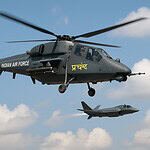
Even as India advances into futuristic domains, legacy platforms remain in focus. HAL Chairman CB Ananthakrishnan addressed mounting concerns over the Dhruv Advanced Light Helicopter (ALH) following a series of crashes. He reiterated confidence in the helicopter’s design, noting that the platform has clocked over 3,50,000 flying hours across operators. Investigations point to maintenance lapses and operational conditions rather than fundamental flaws.
HAL has pledged stricter maintenance regimes, improved pilot training, and upgraded safety features. Export prospects remain open, but the company is keenly aware of reputational stakes tied to safety.
Background: Inducted in the early 2000s, the Dhruv has been exported to several nations and is used across the Indian armed forces for utility, reconnaissance, and combat roles.
Quick Fact: More than 330 Dhruv helicopters are in active service with Indian operators.
What it Means: Retaining confidence in Dhruv ensures operational continuity for India’s rotary-wing fleet. The debate also underlines a broader challenge: India’s platforms must achieve global reliability standards if they are to be competitive in international markets.
French Partnership in Engines: Safran’s Proposal
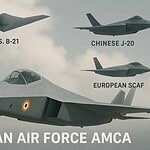
In a development with far-reaching implications, French engine-maker Safran has submitted a proposal to co-develop and manufacture fighter jet engines in India, potentially for the Advanced Medium Combat Aircraft (AMCA). This follows earlier Indo-French collaborations around the Rafale deal and represents a concrete step toward bridging India’s long-standing engine technology gap.
Safran’s plan, reportedly involving the Gas Turbine Research Establishment (GTRE), could see joint development of turbofans tailored for India’s next-generation fighters. The proposal aligns with India’s Atmanirbhar Bharat policy, reducing dependence on imported propulsion systems that have historically constrained indigenous fighter programmes.
Background: India’s Kaveri engine programme, launched in the 1980s, has yet to yield a viable high-thrust fighter engine. Proposals from Safran and other partners are seen as crucial stopgaps until indigenous solutions mature.
Quick Fact: AMCA prototypes are expected to fly with imported GE F414 engines before indigenous alternatives are ready.
What it Means: For India’s policymakers, such partnerships combine immediate capability with long-term technology transfer. Strategically, it strengthens the Indo-French defence axis while positioning India as a co-developer rather than just a customer.
Desert Thunder: Indian Army’s Amogh Fury in the Thar
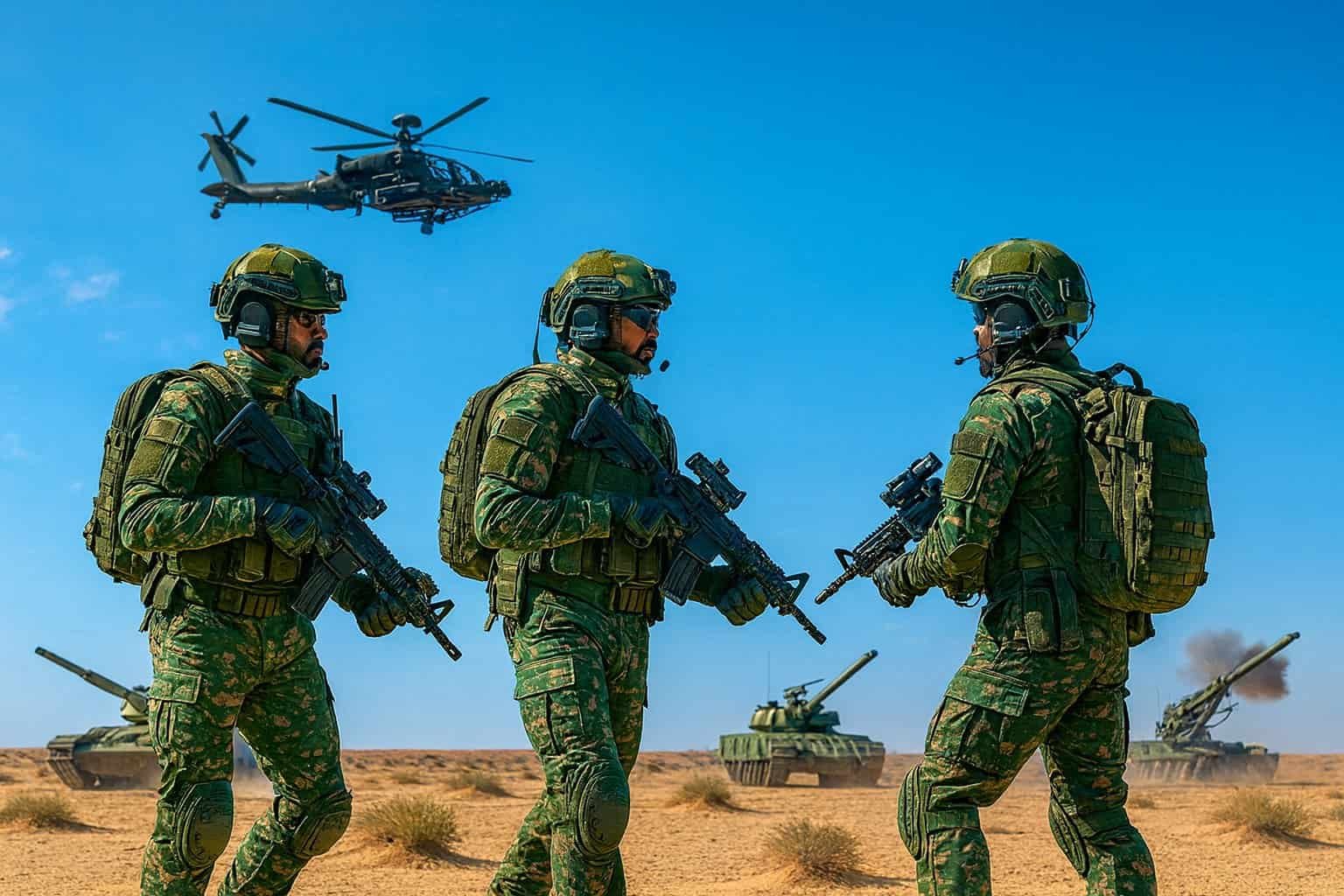
The Indian Army showcased overwhelming firepower in Rajasthan’s Thar Desert through Exercise Amogh Fury. Tanks, howitzers, rockets, and helicopters executed synchronized strikes across simulated battle zones, displaying India’s ability to mount integrated operations in high-intensity environments.
Commanders highlighted the exercise’s focus on speed, precision, and joint operations. Assets included T-90 tanks, K9 Vajra self-propelled howitzers, Pinaka multi-barrel rocket launchers, and Army aviation helicopters, all operating in combined arms synergy.
Background: Annual firepower exercises validate combat doctrines and logistics readiness, especially along India’s western frontier.
Quick Fact: The Thar Desert offers one of Asia’s largest live-fire training environments.
What it Means: For adversaries, such displays are a deterrent signal. For India’s military planners, it reinforces doctrinal confidence that large-scale coordinated firepower can be delivered swiftly across theatres.
Arihant’s New Role as India Expands its SSBN Fleet
India’s pioneering ballistic missile submarine INS Arihant will transition into a training platform as newer, more capable SSBNs like INS Arighat join service. The move frees up frontline assets for deterrence patrols while ensuring Arihant’s expertise continues to shape the next generation of submariners.
Commissioned in 2016, Arihant was India’s first step in securing a sea-based nuclear deterrent. Its shift into training mode reflects the Navy’s growing confidence in its expanding fleet and the maturity of India’s undersea nuclear doctrine.
Background: The Arihant-class was developed under the Advanced Technology Vessel project, aimed at completing India’s nuclear triad.
Quick Fact: Arihant can carry K-15 ballistic missiles with a 750 km range and is configured for longer-range K-4 missiles.
What it Means: This transition symbolises both operational maturity and a generational handover. For India’s strategic planners, it ensures SSBN crews are fully trained while frontline deterrence remains uninterrupted.
Innovating Warfare: DRDO’s EMP Rocket Warhead Plan
DRDO’s Technology Development Fund has issued a call to private industry for developing an electromagnetic pulse (EMP) rocket warhead designed for non-lethal electronic warfare. The warhead would neutralise enemy communications, radars, and drones without causing physical destruction.
The initiative underscores India’s commitment to diversifying into non-kinetic forms of warfare. If realised, the project could create versatile tools for disabling adversary electronics in battlefield or counter-drone operations.
Background: The TDF was set up to promote private-sector collaboration in high-technology defence projects.
Quick Fact: EMP weapons emit high-intensity electromagnetic fields that can disable unshielded electronics within seconds.
What it Means: Such capabilities enhance India’s electronic warfare toolkit, positioning it at par with global trends where disabling enemy systems is as effective as destroying them outright.
Strengthening Tejas: Local MRO for GE F404 Engines
The Tejas Mk1A programme gained momentum with India’s decision to establish a domestic MRO facility for its GE F404 engines. This reduces dependence on overseas maintenance and cuts turnaround times for the growing Tejas fleet.
The move aligns with Atmanirbhar Bharat and ensures higher fleet availability in periods of tension. Local MRO also supports India’s broader ecosystem of aerospace suppliers and technicians.
Background: The Tejas Mk1A incorporates upgraded avionics, radar, and electronic warfare systems, building upon the Mk1 baseline.
Quick Fact: India has ordered 83 Tejas Mk1A fighters, with deliveries stretching through the next decade.
What it Means: For the IAF, this guarantees readiness and cost savings. For policymakers, it signals a tangible stride in self-reliance.
India’s Firm Word to Saudi Arabia
India issued a diplomatic message to Saudi Arabia, urging it to respect regional sensitivities amid reports of deepening Riyadh–Pakistan defence ties. New Delhi balanced the message by reaffirming its strong strategic partnership with Saudi Arabia while voicing concern over links that could destabilise the subcontinent.
This nuanced approach reflects India’s careful Gulf diplomacy, protecting vital energy and trade ties while addressing national security concerns.
Background: India’s ties with Saudi Arabia have expanded rapidly in trade and counterterrorism, even as Riyadh maintains traditional defence links with Islamabad.
Quick Fact: Saudi Arabia supplies nearly 18% of India’s crude oil imports.
What it Means: The statement highlights India’s assertiveness in diplomatic signalling, protecting its interests without jeopardising vital partnerships.
Cruise Missile Leap: DRDO’s ITCM Sea Launch
The DRDO and Indian Navy are preparing for a major sea trial of the Indigenous Technology Cruise Missile (ITCM). Expected to achieve a range of 1,000 km, the missile will enhance India’s maritime strike capabilities with both land-attack and anti-ship roles.
The ITCM, powered by a homegrown turbofan engine, represents the next stage after the Nirbhay programme. If successful, it will provide India with a versatile long-range strike option deployable from naval platforms.
Background: The ITCM builds on lessons from earlier Nirbhay trials, which faced hurdles in propulsion reliability.
Quick Fact: The ITCM is designed with terrain-hugging and sea-skimming capabilities to avoid detection.
What it Means: The trial could significantly upgrade India’s maritime deterrence posture, offering strategic flexibility across the Indo-Pacific.
Looking Ahead: HAL Pushes for Early Tejas MkII Production
HAL has proposed beginning limited production of Tejas MkII before 2030. The aircraft, powered by GE F414 engines and featuring a larger airframe and expanded payload, will become the IAF’s backbone fighter in the next decade.
Early production would bridge gaps as legacy fighters are retired, while providing pilots with experience on the new type. Incremental upgrades could be introduced as newer technologies mature.
Background: The Tejas MkII was approved in 2022 as a medium-weight fighter to replace ageing MiG-29 and Mirage 2000 fleets.
Quick Fact: Tejas MkII will feature 11 hardpoints compared to 8 on Mk1A, vastly improving payload capacity.
What it Means: This ensures continuity in fighter inductions, stabilising India’s combat aircraft pipeline. It also helps HAL keep production lines active while final development continues.
Conclusion
Today’s defence roundup underscores India’s multidomain momentum. In space, India signalled it can blind Chinese satellites. In air power, HAL and Tejas continue evolving with new production and MRO initiatives. At sea, Arihant transitions as a new SSBN fleet rises, while the Navy eyes ITCM cruise missiles for long-range strike. On land, the Army demonstrated firepower in the Thar, while DRDO pushes into electronic warfare innovation.
Together, these updates reflect a military modernizing at scale, balancing diplomacy, innovation, and operational readiness. The message is clear: India’s defence establishment is building depth, resilience, and credibility across domains.