
Indian Defence News Today opened with the most striking revelation of the week: India has reportedly achieved the long-awaited design freeze for its Advanced Medium Combat Aircraft (AMCA) program, setting the stage for accelerated testing and a potential induction as early as 2034. The announcement signals India’s determination to field a fifth-generation fighter on par with global counterparts. But the AMCA news is only the beginning. From the Indian Navy’s nuclear submarine INS Aridhaman nearing commissioning, to advances in indigenous radar for potential Su-57E acquisitions, and even the quiet unveiling of India’s “nesting doll” armed satellites, today’s Defence Roundup paints a picture of a nation pressing forward on every front — air, sea, space, and diplomacy.
AMCA Design Freeze Achieved – Aggressive Testing Ahead
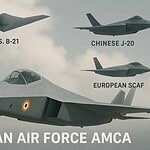
The AMCA program remains the centerpiece of India’s aerospace ambitions. With ADA confirming that the design freeze has been achieved, the focus now shifts to aggressive flight testing. Historically, India’s fighter programs have been plagued by delays, but the AMCA is now being positioned for induction by 2034.
Background: The program began in the early 2010s but only in recent years secured Cabinet Committee on Security approval.
Quick Fact: The AMCA will feature twin engines, internal weapons bays, and advanced stealth composites, making it India’s first true fifth-generation aircraft.
What it Means: Achieving this milestone demonstrates confidence in indigenous R&D and sends a strong signal that India will not remain dependent on imports for frontline combat airpower.
Su-57E Talks Advance – Indigenous Avionics Take Priority
Linked closely to India’s airpower story are the ongoing talks with Russia on the Su-57E stealth fighter. Unlike past collaborations, Indian officials are emphasizing that local variants must incorporate indigenous radar and avionics rather than off-the-shelf Russian systems.
Background: India had previously withdrawn from the FGFA program citing cost and performance concerns.
Quick Fact: The Su-57E is the export version of Russia’s only operational fifth-generation fighter, designed for both air dominance and strike roles.
What it Means: By insisting on local sensors and software, India is both hedging against overreliance on Moscow and ensuring that any acquisition strengthens its domestic aerospace ecosystem.
INS Aridhaman Set for Commissioning in 2026
At sea, the Indian Navy is preparing for the commissioning of its second ballistic missile submarine, INS Aridhaman, by early 2026. This nuclear-powered SSBN will expand India’s sea-based nuclear deterrent, complementing the existing INS Arihant.
Background: The Arihant-class program is central to India’s nuclear triad, ensuring survivable second-strike capability.
Quick Fact: INS Aridhaman is reported to carry 12 K-15 SLBMs or four K-4 missiles with ranges up to 3,500 km.
What it Means: With Aridhaman, India strengthens its maritime deterrence posture against both China and Pakistan, moving closer to a continuous at-sea deterrent model practiced by established nuclear powers.
TEDBF on Track – Dual Variant Roadmap Unveiled
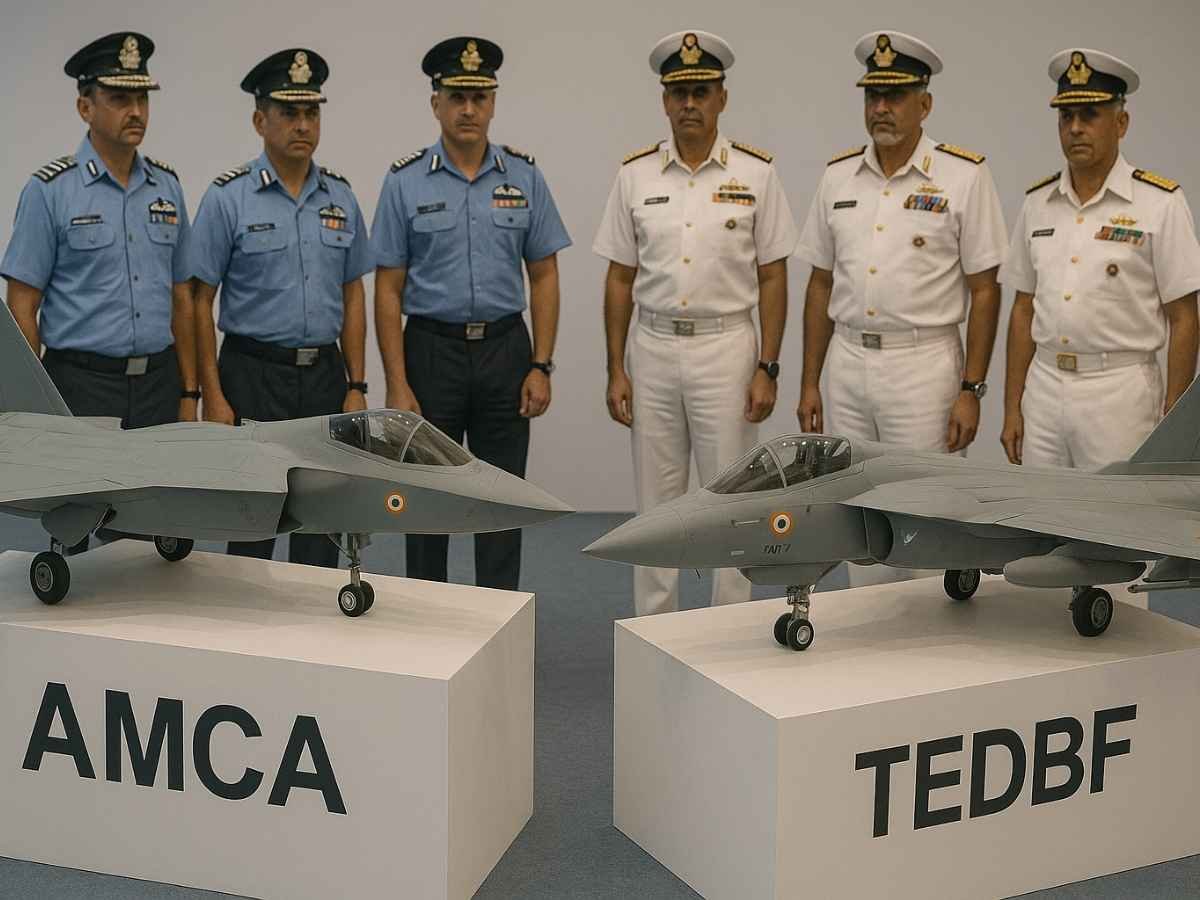
The Naval front also witnessed fresh momentum on the Twin Engine Deck-Based Fighter (TEDBF), with ADA confirming that the Critical Design Review is on track for completion by late 2026. A dual-variant roadmap has been unveiled, one optimized for conventional carriers and the other for future CATOBAR systems.
Background: TEDBF was conceived after India’s experience with the MiG-29K exposed operational limitations.
Quick Fact: The TEDBF is expected to carry a payload of nine tonnes with folding wings for carrier compatibility.
What it Means: As India eyes future carriers like INS Vishal, TEDBF could become the defining fighter for naval aviation, ensuring independence from foreign suppliers.
Tejas Orders Expected to Surpass 220
Even as future programs advance, the Tejas light combat aircraft continues to be the backbone of India’s indigenous fighter success. Dr. Kota Harinarayana, the architect of the LCA, stated that orders are expected to surpass the 220 mark as the IAF doubles down on self-reliance.
Background: Tejas entered service in 2016 and has since won both IAF and export attention.
Quick Fact: The Tejas Mk1A variant is priced at roughly $42 million per unit, cheaper than imported alternatives like the Gripen or F-16.
What it Means: Sustained orders ensure economies of scale, strengthen HAL’s production ecosystem, and provide a reliable foundation for India’s fighter fleet through the 2030s.
India’s “Nesting Doll” Armed Satellites Unveiled
India’s space strategy also made headlines with reports of “nesting doll” armed satellites, designed as orbital countermeasures to neutralize adversary systems such as Pakistan’s PRSS satellites.
Background: Anti-satellite (ASAT) warfare has gained prominence since India’s Mission Shakti test in 2019.
Quick Fact: Nesting doll satellites use smaller sub-satellites stored inside a host that can be released when needed to jam or disable enemy systems.
What it Means: These innovations underline India’s recognition that future wars will extend into space, and securing orbital dominance is as vital as land, sea, or air superiority.
GTRE Sounds Alarm on Outdated Aero-Engine Facilities
But not all reports were celebratory. The Gas Turbine Research Establishment (GTRE) has raised alarms about India’s outdated aero-engine test facilities, urging urgent upgrades and sustained funding.
Background: India’s dependence on imported engines has been a persistent weakness in its fighter programs.
Quick Fact: GTRE’s Kaveri program stalled largely due to inadequate test infrastructure.
What it Means: Without modern facilities, India risks falling behind in engine technology — the linchpin of true aerospace independence.
Saudi-Pakistan Pact Raises Strategic Concerns
Diplomatic alignments also came into focus, with discussions around a possible Saudi-Pakistan defence pact being described as the first step toward an “Arab NATO.”
Background: Saudi Arabia has historically funded Pakistan’s defence programs, though recent years have seen strains in ties.
Quick Fact: Saudi Arabia remains India’s fourth-largest trading partner, with defence dialogue gaining traction since 2019.
What it Means: For India, any deepening Saudi-Pakistan nexus is a reminder to strengthen its own partnerships in West Asia, balancing energy security with geopolitical prudence.
F-35 FACO Offer Evaporates
Across the Atlantic, Lockheed Martin’s ambitious proposal to set up a Final Assembly and Check-Out (FACO) line for F-35s in India has all but evaporated amid U.S. reluctance and IAF wariness.
Background: The FACO pitch was meant to entice India into the F-35 program, offering local assembly.
Quick Fact: Only Italy and Japan host FACO lines outside the U.S.
What it Means: The evaporation reflects U.S. caution in sharing stealth technologies with India and New Delhi’s firm focus on indigenous AMCA development instead.
AMCA Composite Panels Showcased
Finally, ADA showcased early composite panels for the AMCA, highlighting indigenous progress in stealth manufacturing.
Background: Composites are essential for reducing radar cross-section while keeping weight low.
Quick Fact: Over 70% of the AMCA’s structure is expected to be composite.
What it Means: These achievements, combined with the design freeze, suggest India is quietly but steadily closing in on self-sufficiency in stealth fighter technology.
Conclusion
Today’s Defence Roundup captures the breadth of India’s strategic momentum. From AMCA’s design freeze and India’s advances in naval aviation, to armed satellites and nuclear submarines, the updates show a defence ecosystem firing on multiple fronts. Yet challenges persist — outdated aero-engine facilities and shifting alliances remind policymakers that progress is uneven and geopolitics unforgiving. What emerges is a picture of a nation more confident than ever in its ability to balance ambition with pragmatism, steadily shaping its place among the world’s leading defence powers.