
India’s defence sector is buzzing with rapid-fire developments today, from big-ticket fighter jet acquisitions and missile procurements to bold proposals for naval innovation and air defence integration. The most striking revelation came from senior Air Force officials who declared that the Indian Air Force could soon exceed its mandated 42 squadrons, a goal long viewed as aspirational. This statement sets the tone for a day where Indian Defence News Today has been dominated by ambitious aerospace projects, missile upgrades, and a strategic rethinking of how India confronts threats across two fronts.
IAF May Surpass 42 Squadrons Mandate
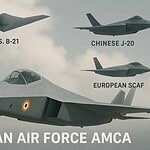
The IAF’s admission that it is poised to exceed the sanctioned 42 fighter squadrons marks a milestone in India’s airpower narrative. Decades of shortfalls plagued by procurement delays, squadron retirements, and dependence on imports now appear to be giving way to a growth trajectory. The induction of Tejas Mk1A, the planned Mk2, and the eventual arrival of the Advanced Medium Combat Aircraft (AMCA) underpin this optimism.
Background: India’s fighter strength once dipped below 30 squadrons, a concern highlighted in multiple parliamentary reports. Indigenous projects like Tejas initially suffered from delays but are now hitting delivery milestones.
Quick Fact: A fully combat-ready IAF requires 45 squadrons to confidently manage a two-front war scenario.
What it Means: Exceeding 42 squadrons reshapes regional dynamics, signalling to both China and Pakistan that India is narrowing capability gaps. It also validates the Make in India approach in aerospace production, enhancing credibility for HAL and private-sector participation.
HAL’s Expanding Role in AMCA
HAL confirmed its pivotal role in the AMCA programme, both in design collaboration and in developing the proposed 120kN engine. Senior executive D.K. Sunil highlighted partnerships with the Aeronautical Development Agency (ADA) and foreign OEMs for critical design inputs.
Background: The AMCA project envisions India’s first fifth-generation stealth fighter, aimed at replacing legacy platforms and rivalling foreign counterparts like the F-35 and Su-57.
Quick Fact: The 120kN engine project is expected to power both the AMCA and potential naval derivatives.
What it Means: HAL’s integration ensures synergy between R&D and production, bridging India’s long-standing engine development gap. It underscores how India is positioning itself for aerospace self-reliance rather than perpetual imports.
Astra Mk1 BVRAAM Procurement
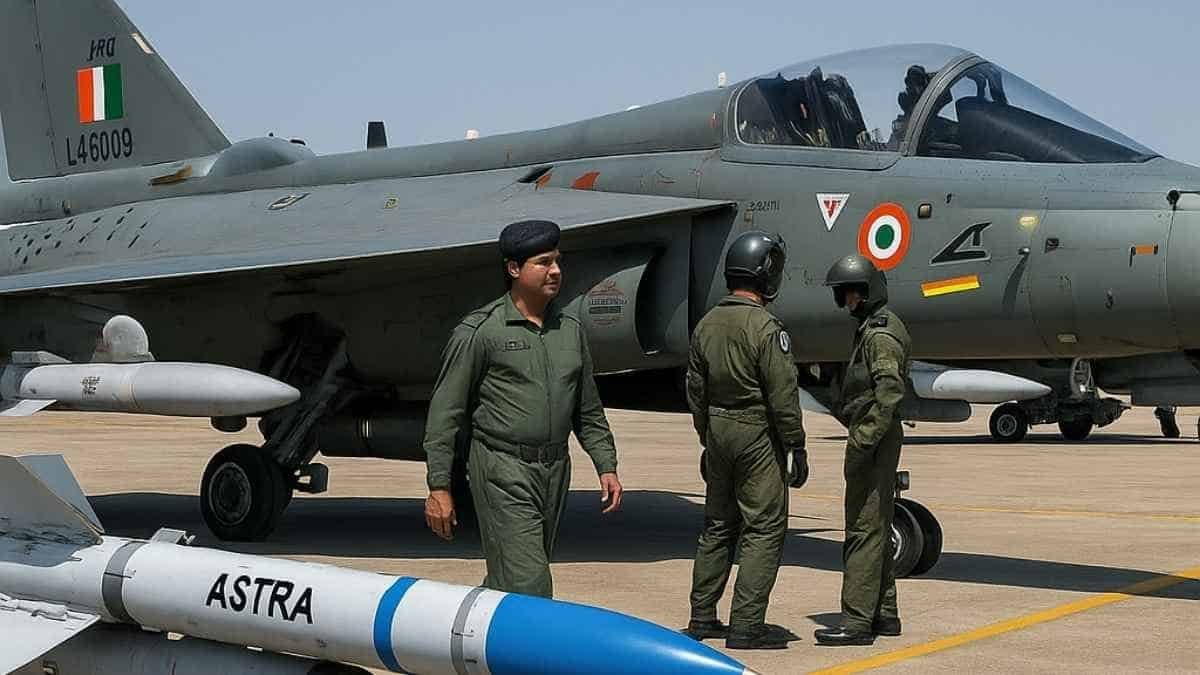
The IAF and Bharat Dynamics Limited (BDL) are in advanced talks for the procurement of 500 Astra Mk1 beyond-visual-range air-to-air missiles to equip Tejas Mk1A fighters. This will be the first indigenous BVR missile fleet deployment for Tejas.
Background: Astra was developed by DRDO with an operational range of 110 km, comparable to international standards like the AMRAAM. Initial trials began in 2017, with serial production now underway.
Quick Fact: The Astra Mk1 has already been integrated onto Su-30MKI squadrons, giving them indigenous long-range strike capability.
What it Means: Equipping Tejas with Astra eliminates dependency on imported Derby missiles, reducing costs and enhancing operational autonomy. It also boosts export prospects for Tejas by advertising it as a fully indigenous system.
DIRCM Upgrades for LCH Prachand
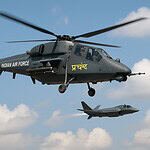
HAL revealed it has received proposals from Israel’s Elbit Systems and Italy’s Elettronica to provide Directional Infrared Counter Measures (DIRCM) for the LCH Prachand. This system will shield the helicopter from MANPADS and infrared-guided threats.
Background: The LCH Prachand, inducted by both the IAF and Indian Army, is tailored for high-altitude warfare but remains vulnerable to modern MANPADS used by adversaries.
Quick Fact: DIRCM systems use laser beams to confuse or blind incoming missiles’ infrared seekers.
What it Means: Integrating DIRCM will significantly increase survivability in hostile environments like Ladakh or Arunachal Pradesh. It highlights India’s openness to incorporating advanced foreign tech while indigenous solutions are developed in parallel.
Proposal to Convert Navy’s LPDs into UAV Carriers
Naval analysts have suggested converting planned Landing Platform Docks (LPDs) into UAV carriers, transforming them into platforms capable of ISR and strike missions across the Indian Ocean.
Background: India plans to acquire LPDs to strengthen amphibious capabilities. However, delays in procurement and evolving naval warfare concepts have prompted new ideas.
Quick Fact: China has already experimented with UAV carrier concepts, deploying drone swarms in naval exercises.
What it Means: If adopted, India’s UAV carriers could offer cost-effective force projection compared to aircraft carriers. It would also align with global trends where unmanned platforms dominate reconnaissance and strike roles.
Tejas Mk2 Gains Momentum
The LCA Tejas Mk2, billed as a cost-effective, efficient fighter, has entered advanced development stages. HAL emphasised its balance between affordability and performance, making it competitive in both domestic and export markets.
Background: Designed as a medium-weight fighter, the Mk2 is expected to replace MiG-29, Mirage-2000, and Jaguar fleets.
Quick Fact: The Tejas Mk2 will feature higher payload capacity (6.5 tonnes) and a GE F414 engine, giving it superior thrust-to-weight ratio.
What it Means: The Mk2 ensures continuity in India’s fighter production line, keeping assembly lines busy until AMCA enters service. It is central to India’s ambition of fielding 55 squadrons in the long term.
India’s Push to Attract NRI Aerospace Talent
The government is planning incentives to lure NRI aerospace professionals back to India for private-sector-led defence programs. By tapping into diaspora expertise, India hopes to accelerate timelines for indigenous aircraft, drones, and engines.
Background: Brain drain in the aerospace sector has long hindered India, with many engineers working for Boeing, Airbus, or Lockheed Martin.
Quick Fact: Indian-origin scientists played significant roles in NASA’s Artemis and ISRO’s Chandrayaan-3 programmes.
What it Means: Repatriating talent could bridge skill gaps in private firms entering aerospace manufacturing, boosting the ecosystem around HAL and DRDO.
“Sudarshan Chakra” Integrated Air Defence Concept
A senior military official described Sudarshan Chakra as a “mother of all air defence systems,” integrating various platforms into a seamless shield. The system aims to combine S-400s, indigenous SAMs, radars, and space-based sensors.
Background: Fragmented air defence networks have previously created gaps in coverage. Integration seeks to provide a unified command-and-control architecture.
Quick Fact: India has invested over $20 billion in air defence acquisitions in the past decade, ranging from Akash to S-400.
What it Means: A unified Sudarshan Chakra would elevate India’s deterrence, especially against saturation drone and missile attacks. It marks a move toward the network-centric warfare doctrines embraced by leading militaries.
IAF’s Integrated Air Command and Control System (IACCS)
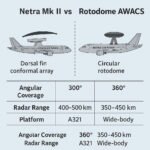
The IAF’s IACCS has reportedly given India a decisive edge over Pakistan’s command-and-control networks. By integrating radar, AWACS, and satellite inputs, IACCS enables faster response cycles.
Background: First deployed in the 2010s, IACCS was designed to overcome past deficiencies exposed in the Kargil War, where delays in air picture dissemination hindered operations.
Quick Fact: The system is spread across multiple hardened centres, linked by secure fibre-optic networks.
What it Means: IACCS ensures India can detect, track, and engage aerial threats faster than adversaries. Its operational edge played a role in neutralising Pakistani intrusions during the 2025 conflict.
Why China’s HQ-9B Failed While S-400 Triumphed
Analysts have highlighted how China’s HQ-9B air defence system underperformed in a recent India-Pakistan clash, while the Russian-origin S-400s proved decisive. Reports suggest Pakistan’s reliance on Chinese systems left it vulnerable.
Background: The HQ-9B is a derivative of Russia’s S-300 but lacks the same radar sophistication. Pakistan inducted these systems in hopes of balancing India’s S-400 advantage.
Quick Fact: India’s S-400s are deployed in Punjab and Arunachal sectors, covering both Pakistan and China simultaneously.
What it Means: The contrasting performance underscores the qualitative gap between Indian and Pakistani air defence assets. It validates India’s investment in S-400 while raising questions about Pakistan’s procurement strategy.
Conclusion
Today’s defence developments reveal a confident India positioning itself for long-term dominance across air, land, and sea domains. From ambitious squadron growth and advanced missile procurements to futuristic UAV carrier concepts, the Defence Roundup paints a picture of a nation no longer reacting to threats but actively shaping its security environment. The consistent thread across these updates is self-reliance, with HAL, DRDO, and private firms increasingly at the centre of India’s Global Defence ambitions.