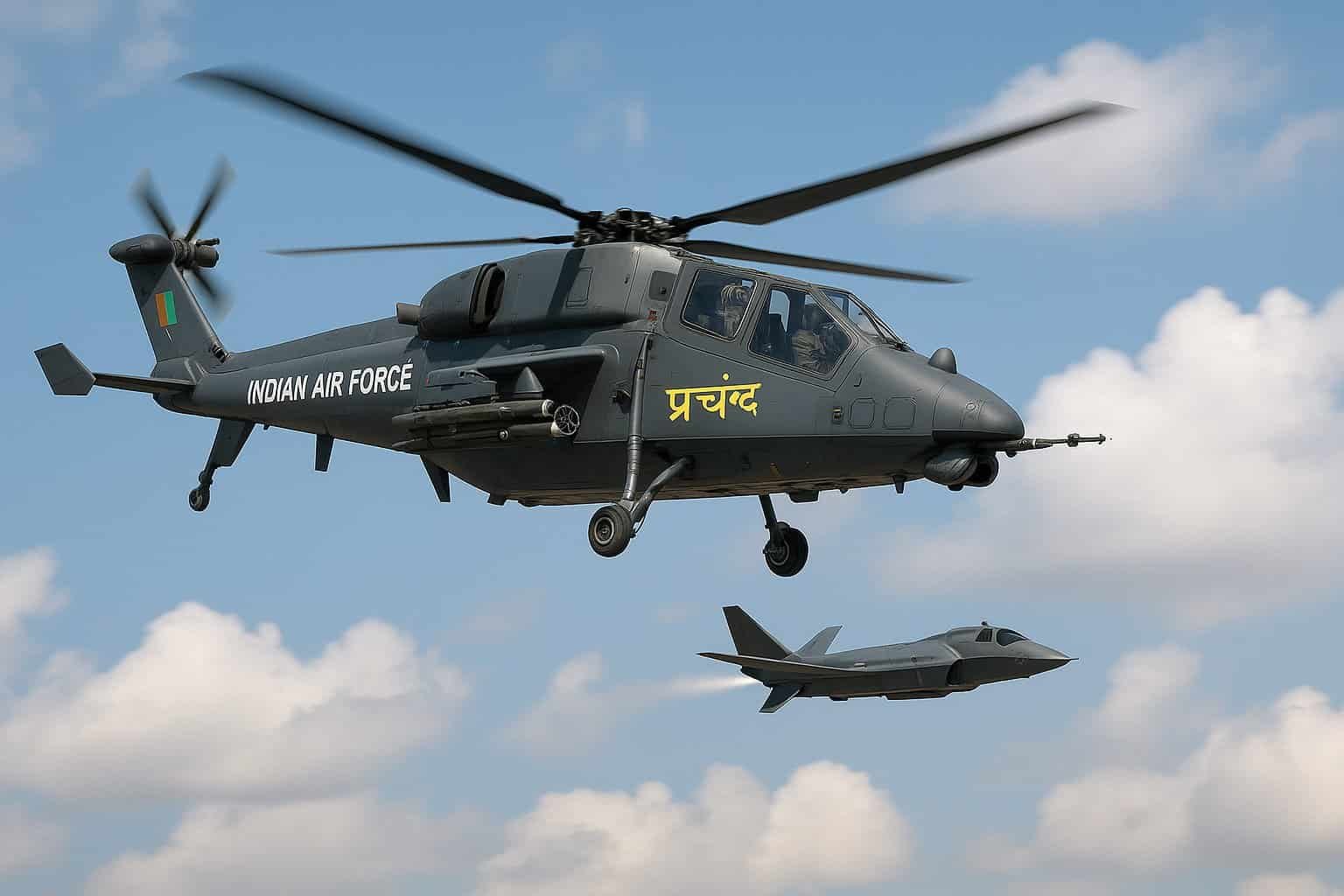

LCH Prachand’s anti-drone role is emerging as one of the most innovative upgrades in India’s indigenous defence ecosystem. Designed and built by Hindustan Aeronautics Limited (HAL), the Light Combat Helicopter Prachand—meaning “fierce” in Hindi—has already proven itself in high-altitude warfare. Now, the helicopter is being transformed into a futuristic anti-drone hunter with the ability to launch specialized air-launched drones to intercept and neutralize hostile unmanned aerial vehicles (UAVs).
This development reflects a paradigm shift in how the Indian Air Force and Army are preparing to deal with new-age aerial threats. Drones have become central to modern warfare, with adversaries deploying them for surveillance, electronic jamming, and precision strikes. By arming the LCH with its own drone wingmen, India is ensuring its frontline combat platforms remain ahead of the curve.
LCH Prachand Anti-Drone Role and Strategic Need
The emergence of UAVs in conflict zones, from the Armenia–Azerbaijan clashes to the Russia–Ukraine war, has demonstrated how even small drones can disrupt conventional forces. India, facing similar threats along its western and northern borders, has recognised the urgency of counter-drone capabilities. The LCH, already built for high-altitude operations in Ladakh and Siachen, is the ideal platform to test these systems.
The air-launched drones (ALDs) being developed for Prachand will be capable of being released mid-flight. Once airborne, these intelligent drones can track enemy UAVs, relay location data, and, if necessary, destroy the target through a self-destruct mechanism. This allows the LCH to remain at a safe distance while still projecting its defensive reach.
The strategic benefit lies in flexibility. Missiles can indeed shoot down drones, but they are costly and not always efficient against swarms or smaller UAVs. Using dedicated anti-drone drones offers a reusable, cost-effective, and stealthy alternative that complements traditional air-to-air missiles.
India’s Push for Indigenous Innovation
The project highlights India’s growing emphasis on Atmanirbhar Bharat in the defence sector. HAL’s work on the LCH, combined with input from defence startups developing ALDs, shows how a collaborative ecosystem is driving cutting-edge solutions. This not only reduces dependency on foreign systems but also accelerates timelines and customises technology for India’s unique operational environments.
According to PIB Defence, the government has prioritized counter-drone initiatives across the armed forces. HAL has also stated in public briefings that Prachand’s modular design makes it easier to integrate new systems like ALDs. The DRDO is reportedly assisting with guidance and sensor technologies for the project.
Beyond national security, such program’s stimulate India’s defence industry, generating opportunities for local startups in artificial intelligence, robotics, and avionics. It is a step toward building a sustainable defence technology base capable of competing internationally.
Looking Ahead
For the Indian Air Force, the LCH Prachand’s anti-drone role is both timely and forward-looking. As UAV threats proliferate globally, helicopters capable of defending themselves and neutralizing aerial intrusions will become essential. If successful, this model could be replicated across other platforms, including attack helicopters and even transport aircraft.
The transformation of the LCH from a ground-attack specialist to a versatile anti-drone guardian is not just a technical upgrade—it is a strategic message. India is innovating rather than merely adapting. In future conflicts, the sight of a Prachand in the sky may not just signify firepower against ground targets, but also dominance over the invisible drone battles unfolding overhead.
For more updates on indigenous platforms like Prachand, visit our Indian Air Force section.
FAQ
Q1: What is the new anti-drone role of LCH Prachand?
The LCH Prachand anti-drone role involves launching small air-launched drones to intercept and neutralise hostile UAVs while keeping the helicopter safe.
Q2: Why use drones instead of missiles against UAVs?
Drones are cheaper, stealthier, and reusable compared to missiles, making them more effective against UAV swarms or smaller aerial threats.
Q3: How does this support India’s self-reliance in defence?
By combining HAL’s helicopter expertise with defence startups developing drone technology, the project strengthens indigenous capability under Atmanirbhar Bharat.