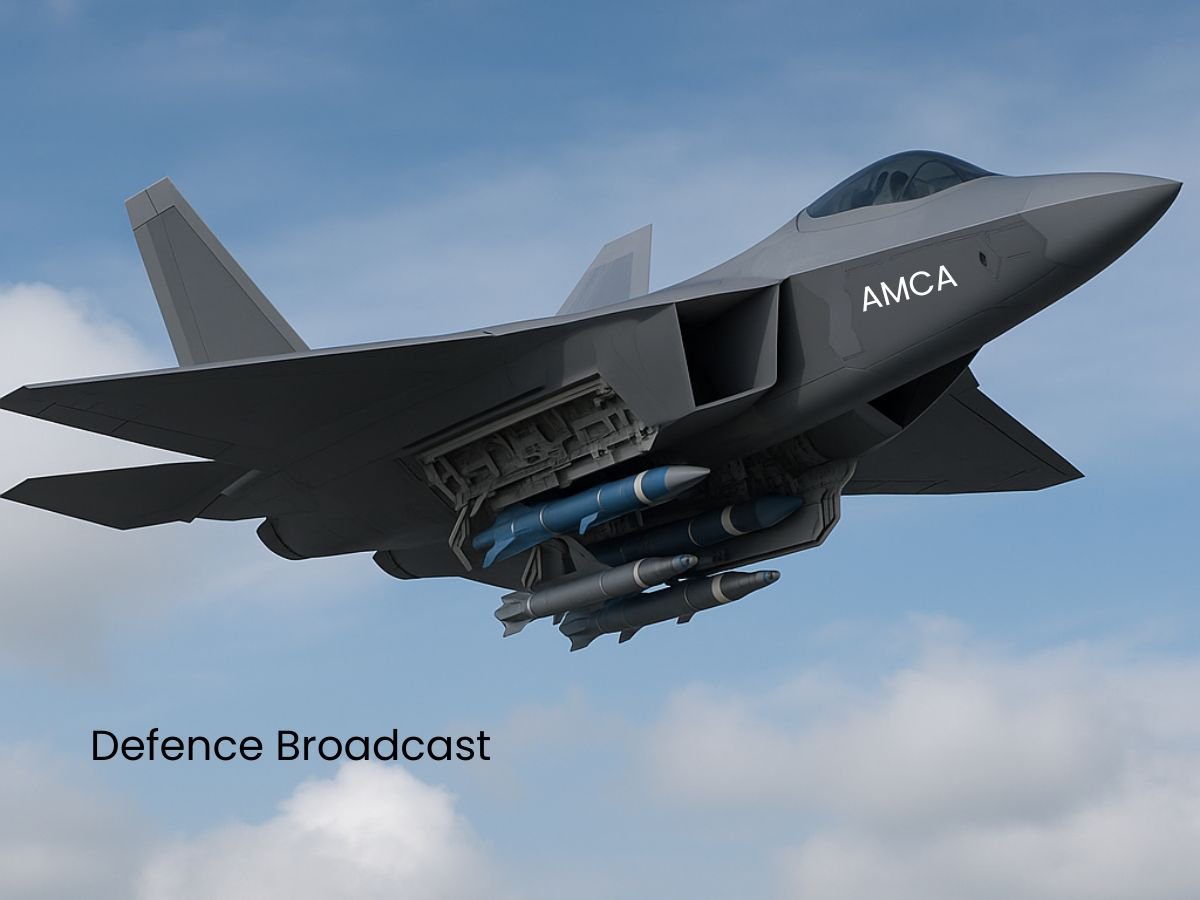

AMCA fifth-generation fighter jet represents one of India’s most ambitious military aviation projects, promising to transform the nation into a true leader in aerospace technology. The Advanced Medium Combat Aircraft (AMCA), being developed by the Defence Research and Development Organization (DRDO), Hindustan Aeronautics Limited (HAL), and the Aeronautical Development Agency (ADA), is designed to deliver stealth, speed, and intelligence that will redefine the Indian Air Force’s operational capability.
The project was cleared by the Cabinet Committee on Security (CCS), signaling the government’s intent to accelerate prototype development by the late 2020s. If successful, India will join a select group of nations, including the United States, Russia, and China, that field fully indigenous fifth-generation fighters.
Strategic Significance of the AMCA Fifth-Generation Fighter Jet
The AMCA fifth-generation fighter jet is more than just a weapons platform—it is a strategic statement. India faces an evolving threat landscape, from advanced air defences in neighboring states to the increasing use of unmanned systems. Fifth-generation aircraft provide the edge by combining stealth, advanced avionics, and network-centric capabilities. For India, this project represents technological independence, reduced dependence on costly imports, and a critical leap in deterrence capability.
Globally, only a handful of nations have mastered stealth fighters such as the American F-35 and Russian Su-57. AMCA aims to place India in this league, boosting its diplomatic standing and defence export potential. According to PIB Defence, the program aligns closely with the Atmanirbhar Bharat initiative, symbolizing national pride and industrial maturity.
Technologies Defining the AMCA
The AMCA will be India’s first stealth fighter built from the ground up. Engineers are designing it with radar-absorbing geometry and materials to reduce detectability. Its internal weapons bay will allow it to carry missiles and bombs while maintaining stealth, a capability absent in current Indian fighters like the Su-30MKI or Tejas.
The jet is expected to integrate artificial intelligence to assist pilots in real-time decision-making, a capability that could give it an edge in dogfights and beyond-visual-range engagements. Future variants may even have optional unmanned functionality, enabling the AMCA to operate as a drone in high-risk environments. To enhance flexibility, it will also feature network-centric warfare capabilities, enabling communication with drones, satellites, and other fighters simultaneously.
Timeline and Development Path
The AMCA project is structured in two phases. Phase 1 involves building prototypes by 2028 for rigorous testing, while Phase 2 envisions mass production in the early 2030s. A new high-thrust engine, potentially co-developed with international partners, is also part of the roadmap. This ensures the AMCA will remain relevant for decades, with upgrade potential built into its design.
The Aeronautical Development Agency (ADA) is coordinating flight testing, while HAL prepares for eventual production. Private-sector participation is also being encouraged, with several Indian firms expected to provide avionics, sensors, and composite materials.
AMCA in the Larger Context
The AMCA fifth-generation fighter jet will eventually complement India’s existing Rafales and Su-30MKIs while replacing older MiG-29s and Jaguars. Its deployment will give the Indian Air Force a fleet capable of meeting 21st-century threats with confidence. As DRDO notes, the AMCA will also pave the way for spin-off technologies in civilian aviation, artificial intelligence, and materials science.
For India’s defence ecosystem, the project is a catalyst. It not only advances technological independence but also generates high-skill jobs across design, manufacturing, and data sciences. For the public, the AMCA becomes a symbol of India’s rise as a global aerospace power.
The skies may be crowded with foreign fifth-generation fighters, but with the AMCA, India is not just catching up—it is preparing to lead. For deeper insights into India’s modernization efforts, visit our Indian Air Force category.
FAQ
Q1: What is the AMCA fifth-generation fighter jet?
The AMCA fifth-generation fighter jet is India’s indigenous stealth aircraft project, designed by DRDO, HAL, and ADA to provide advanced combat capability.
Q2: When will the AMCA be ready for induction?
Prototypes are expected by 2028, with full-scale production projected in the early 2030s after flight trials and engine development.
Q3: How is the AMCA different from India’s existing fighters?
Unlike current fighters, the AMCA incorporates stealth, internal weapons bays, AI-assisted avionics, and potential unmanned operations, making it India’s first true fifth-generation aircraft.