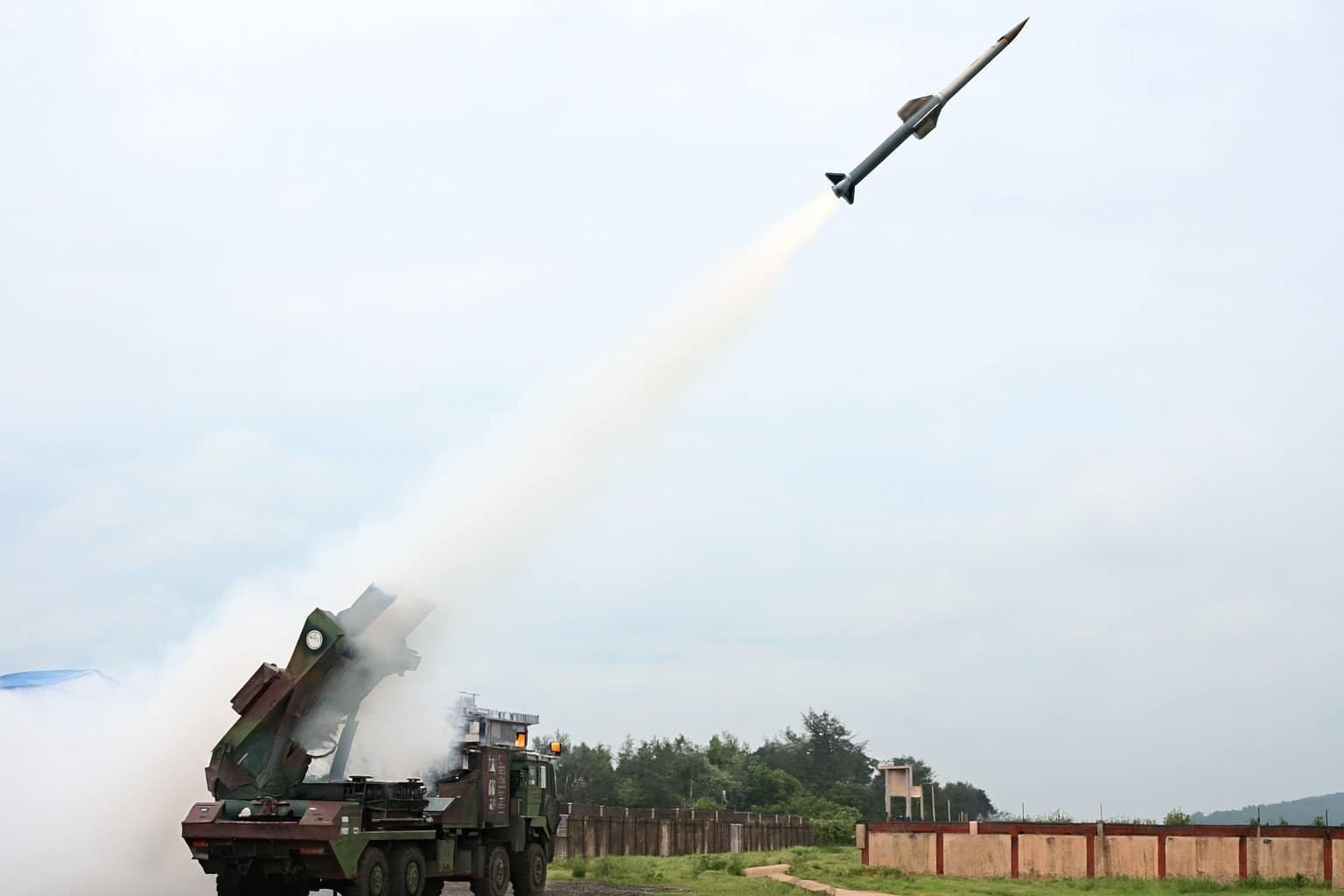

DRDO’s Integrated Air Defence Weapon System has successfully completed its maiden flight test, marking a turning point in India’s quest for a robust, multi-layered shield against aerial threats. Conducted under the supervision of the Defence Research and Development Organization (DRDO), the tests validated the ability of India’s indigenous technology to track, intercept, and neutralize hostile targets in real time, putting the country in a select group of nations capable of developing and deploying such integrated systems.
The Integrated Air Defence Weapon System (IADWS) combines radars, interceptors, and command systems into a single networked structure, enabling seamless coordination across multiple layers of defense. In its first test, the system intercepted simulated hostile targets with precision, showcasing its effectiveness in neutralizing threats at varying altitudes. Officials emphasized that the system demonstrated not just the performance of individual components, but the strength of an integrated, network-centric defense solution designed for modern warfare.
Strategic Significance of DRDO’s Integrated Air Defence Weapon System
The induction of the DRDO Integrated Air Defence Weapon System carries profound strategic implications for India’s national security. In an era where adversaries are investing in drones, cruise missiles, and hypersonic systems, a layered, indigenous shield is critical for deterrence. The IADWS is designed to complement existing assets such as the Russian-origin S-400 Triumf and the indigenous Akash missile systems, ensuring a tiered defence network that reduces vulnerabilities.
Experts argue that this achievement is not simply a matter of technological demonstration but a clear signal of India’s commitment to Atmanirbhar Bharat in defence. By reducing reliance on foreign suppliers, India gains greater control over upgrades, costs, and deployment timelines. The IADWS also strengthens India’s bargaining position in global defence diplomacy, positioning the country not only as a user but also as a potential exporter of advanced defence technology.
The system’s development also highlights the growing maturity of India’s defence ecosystem. The integration of advanced radar systems, command and control centres, and surface-to-air interceptors involves a mix of state-run entities like Bharat Electronics Limited (BEL) and private-sector technology partners. This synergy reflects a transition from licence-based production to genuine innovation within the Indian defence industrial base.
Beyond the Test: What Comes Next
The maiden test of the DRDO Integrated Air Defence Weapon System is only the beginning. More trials are planned in diverse terrain and climatic conditions, including desert environments and high-altitude Himalayan regions. These evaluations will assess the system’s mobility, reliability, and ability to perform under stress. Once these trials are complete, the Indian Armed Forces are expected to begin induction of the system into operational regiments.
This capability is also expected to have dual-use potential. Many of the subsystems developed for IADWS—such as real-time data fusion, radar technology, and automated command systems—can be leveraged for both civilian and military applications, ranging from disaster management to space situational awareness.
For policymakers, the development signals a critical shift in India’s approach to national defence: the recognition that security in the 21st century requires a blend of indigenous innovation, layered deterrence, and global credibility.
Internal analysis of India’s evolving defense shield is also available in our Weapon Systems section at https://DefenceBroadcast.com .
FAQ
Q1: What is the DRDO Integrated Air Defence Weapon System?
The DRDO Integrated Air Defence Weapon System (IADWS) is an indigenous platform combining radars, interceptors, and command systems to provide a multi-layered shield against aerial threats.
Q2: Why is the maiden test of the IADWS significant?
It marks India’s successful demonstration of an integrated, indigenous air defence shield, reducing dependency on imports and enhancing national security.
Q3: How will the IADWS complement existing systems like the S-400?
The IADWS will provide medium-range coverage and integration with current deployments, creating a layered, redundant, and more effective air defence architecture.