
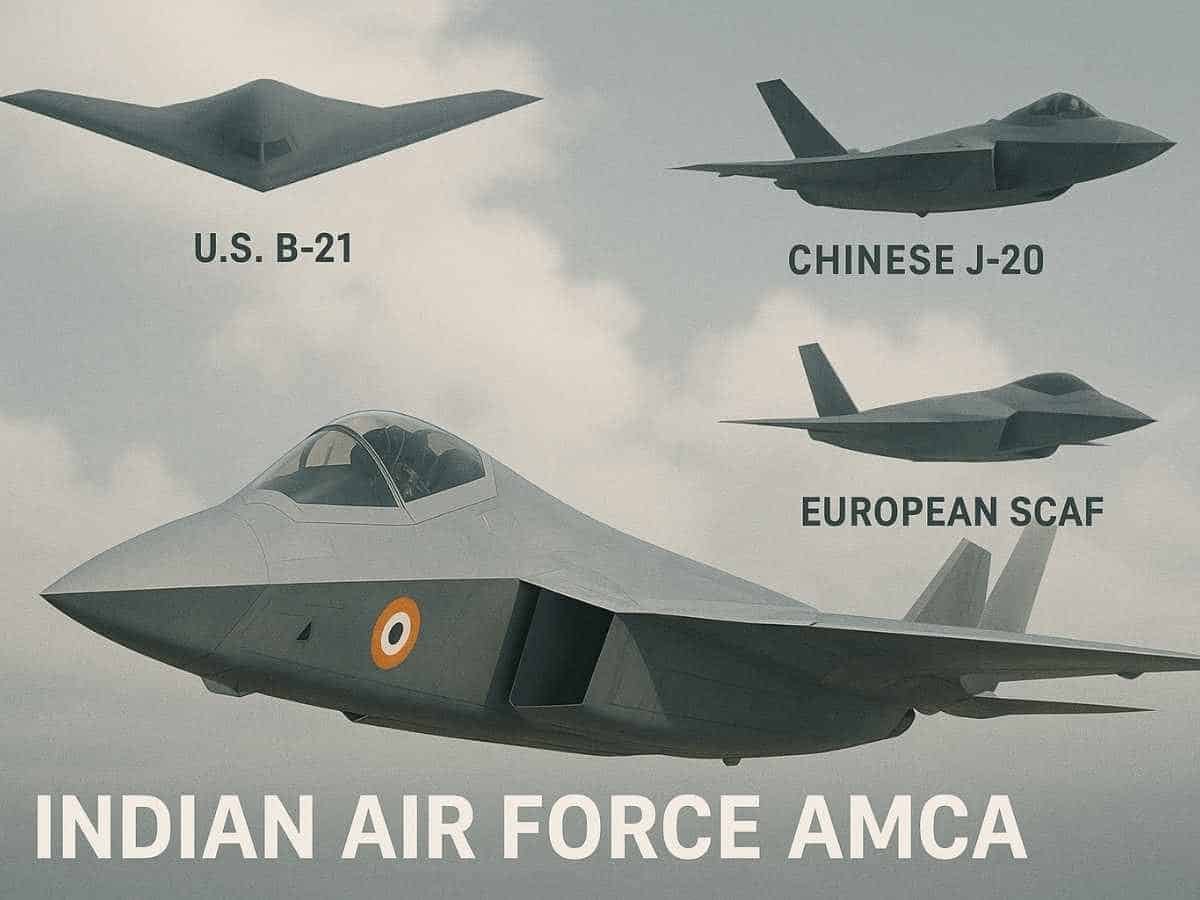

Indian Defence Roadmap vs Global Trends has become a critical subject of debate in 2025 as the Ministry of Defence finalizes its Integrated Capability Development Plan (ICDP) 2024–2040. This roadmap envisions India’s long-term force structure, weapons procurement, and technological leapfrogging across domains. The plan is benchmarked against global powers—most notably the United States, China, and Europe—each of which is pursuing distinct trajectories in military modernization. A comparative look at India’s 15-year vision against global trends reveals not only progress but also structural gaps that need urgent policy attention.
India’s roadmap has three pillars: theatre commands and jointness, Atmanirbhar Bharat-driven defence production, and emerging domains such as space, cyber, and drones. These elements reflect lessons from recent conflicts in Ukraine, Gaza, and the Indo-Pacific, where multi-domain operations and indigenous resilience have proved decisive. However, comparing India’s trajectory with the massive investments of the US, the speed of China’s People’s Liberation Army (PLA) reforms, and the incremental but unified efforts in Europe exposes both strengths and vulnerabilities in India’s path.
India’s 15-Year Defence Plan: Structure and Ambition
The ICDP sets out to achieve integration of the Indian Army, Navy, and Air Force into joint theatre commands by 2035, with budgetary allocations skewed towards modernization rather than pensions and salaries. The plan prioritizes the induction of Tejas MkII, AMCA stealth fighters, nuclear-powered submarines, hypersonic missiles, and AI-enabled drones within the next two decades. According to the Ministry of Defence’s 2024–25 budget data, ₹6.2 lakh crore ($75 billion) was allocated, of which ₹1.7 lakh crore is earmarked for capital acquisitions—still modest compared to the $886 billion US defence budget or China’s estimated $296 billion【SIPRI Yearbook 2024 | SIPRI】.
The roadmap also places heavy emphasis on self-reliance: by 2035, the government projects that 65–70% of military hardware will be domestically produced. HAL, DRDO, and private giants like Tata and Adani are central to this push, supported by over 600 MSMEs integrated into the supply chain. The creation of the Defence Space Agency and Defence Cyber Agency marks India’s recognition that the next war will be fought as much in orbit and servers as in trenches and seas.
United States: Global Primacy through Multi-Domain Dominance
The United States continues to set the benchmark in defence modernisation, focusing on multi-domain operations (MDOs) that integrate land, air, sea, space, and cyber. The Pentagon’s 2023 National Defense Strategy identifies China as the pacing threat, leading to accelerated investments in B-21 Raider stealth bombers, Columbia-class nuclear submarines, hypersonic weapons, and JADC2 (Joint All-Domain Command and Control) networks.
The US maintains its lead in R&D spending—over $130 billion annually, dwarfing India’s entire defence budget. Moreover, American defence firms like Lockheed Martin and Northrop Grumman dominate global markets, while alliances such as AUKUS and NATO amplify US capabilities across theatres.
For India, the lesson is clear: without integrated battle networks akin to JADC2, its own theatre command reforms risk being operationally incomplete. While India is experimenting with the Integrated Air Command and Control System (IACCS), the scale is not comparable to US MDO frameworks.
China: Rapid PLA Modernisation and Grey-Zone Pressure
China remains India’s most immediate strategic competitor. The PLA has undergone radical reforms since 2015, creating five theatre commands and prioritising the Rocket Force, Strategic Support Force, and Navy. China’s 2025 roadmap includes carrier strike groups (Type 003 Fujian-class), J-20 stealth fighters, DF-41 ICBMs, and advanced satellite constellations.
SIPRI estimates place China’s defence budget at nearly $296 billion, although Western analysts argue the true figure may be 40–50% higher due to hidden R&D spending【SIPRI Yearbook 2024 | SIPRI】. Importantly, Beijing is pioneering in hypersonic glide vehicles (HGVs) and quantum communications—domains where India remains in early R&D stages.
China also applies grey-zone warfare, using coast guard vessels, drones, and cyberattacks below the threshold of war. For India, this raises the challenge of continuous peacetime vigilance, stretching resources thin across the Himalayas and the Indian Ocean.
Europe: Fragmented but Growing Collective Effort
Europe has historically lagged behind in defence spending, but the Ukraine war has jolted NATO and EU members into action. Germany pledged a €100 billion “Zeitenwende” fund, Poland has committed to spending 4% of GDP on defence, and France is pushing its SCAF sixth-generation fighter program. The EU’s Permanent Structured Cooperation (PESCO) aims to integrate procurement and R&D.
Yet Europe suffers from fragmentation: multiple tank, fighter, and missile projects dilute efficiency. Compared to India’s centralised approach under ICDP, Europe’s coordination remains partial, though collective defence industries like Airbus Defence and MBDA offer lessons in consortia-driven innovation.
Comparative Assessment: India’s Strengths and Weaknesses
India’s defence roadmap stands out in three areas:
- Self-reliance focus under Atmanirbhar Bharat, reducing import dependency.
- Balanced tri-service modernisation with both continental and maritime priorities.
- Integration of private sector and MSMEs in defence manufacturing.
However, India lags in:
- Defence R&D spending, at just 0.7% of GDP, versus the US’s 3.5% and China’s 1.7%.
- Operational jointness, as theatre command reforms remain politically contentious.
- Next-gen tech adoption, particularly in hypersonics, directed-energy weapons, and quantum systems.
RAND reports have repeatedly stressed that India risks falling into a “modernisation gap” if procurement outpaces doctrinal adaptation【RAND 2023†source】.
Strategic Takeaways and Outlook
India’s roadmap signals clear ambition but constrained resources. The most striking lesson from global comparisons is that technology integration and doctrinal reform must proceed together. Without strong funding in R&D, India risks dependence on external suppliers even within the Atmanirbhar framework. At the same time, Europe’s cooperative model suggests that India should deepen partnerships with France, Japan, and the US, while carefully hedging against overreliance on Russia.
The coming decade will be decisive. By 2035, India will either have created a cohesive joint force with indigenous capabilities or face the prospect of being technologically outpaced by China and strategically outstretched between continental and maritime commitments. The ICDP’s promise is bold; execution will define whether India emerges as a true global middle power with deterrent credibility.
FAQ: Indian Defence Roadmap vs Global Trends
Q1. What is India’s 15-year defence roadmap?
India’s Integrated Capability Development Plan (2024–2040) focuses on theatre commands, indigenous weapons like Tejas MkII and AMCA, nuclear submarines, and emerging tech in space and cyber.
Q2. How does India’s defence budget compare with global powers?
India spends around $75 billion annually, far below the US ($886 billion) and China ($296 billion), but comparable to European majors like France or the UK.
Q3. What are the biggest gaps in India’s roadmap compared to global trends?
India lags in R&D spending, hypersonic and quantum technologies, and operational jointness, while excelling in self-reliance and private sector integration.